Independent help for inherited coin collections

You inherited the coins.
Now learn what they're really worth.

No hype. No pressure to sell. Identify what you have, research actual sold prices, compare the net from selling individually with written shop and estate-buyer offers, and decide what fits your family.
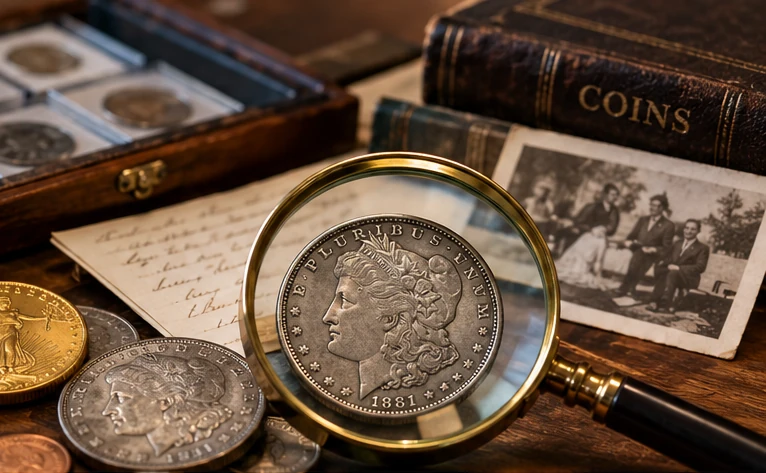
Illustrative inherited coin collection with an old album, documents and a magnifying glass
Before you sell a single coin

Don't clean coins. Don't remove them from labeled holders. Don't assume a price-guide figure is a cash offer. Photograph what you have and get more than one opinion for potentially valuable items.
Start here

Five steps to protect your inheritance

01 · Secure

Keep everything together

Store the collection securely. Preserve envelopes, labels, receipts, albums, and notes from the original owner.

02 · Document

Photograph and inventory

Record dates, mintmarks, denominations, quantities, certifications, and any original grouping.

03 · Identify

Separate the categories

Distinguish circulated change, silver and gold bullion, collectible coins, graded coins, and foreign issues.

04 · Research

Understand three values

Compare retail guides, recent realized sales, and likely net proceeds. Those numbers are not interchangeable.

05 · Compare

Get informed offers

For meaningful collections, consider independent appraisal and multiple written dealer offers or a suitable specialist auction.

Free · Your choice

You don't have to sell

Keep the collection, preserve it for your family, sell selectively, or sell together. There is no mandatory next step.

Free • private • no account

Build your collection inventory

Start with a coin, roll, album, or group of similar coins. Add an estimated per-sale-unit eBay sold price only after researching comparable completed sales. Inventory entries and values stay in this browser; they are not attached to a buyer inquiry.

Do not clean coins or remove old labels. An old coin is not necessarily rare, and two coins with the same date can sell for drastically different amounts depending on mintmark, condition, certification and variety. Learn how to research defensible comparisons.
Coin or sale lotYear / mintUnitsCategoryeBay comp / unitActions
No entries yet.
Recorded sale units0
Units with sold-price research0
Observed eBay gross, if all researched units sell$0.00

The eBay figure is a sum of your own estimates, not a live price quote, guarantee, appraisal, or real-time market feed. An album or roll sold as one lot counts as one sale unit. We intentionally do not guess the value of unidentified items. Clearing your browser data erases the local copy: export a backup.

Three selling routes, one honest comparison

Retail potential vs. the cash you can realistically take home

Enter real eBay sold-price comparisons above, then adjust the costs of selling. When a coin shop or estate buyer gives you an offer, enter the actual written cash offer below. We won't manufacture either offer from a generic percentage of retail.

01Piece out on eBay

Highest potential gross, but more listings, more handling, platform fees, shipping, potential returns and waiting.

02Visit a coin shop

A shop can examine coins in person and may offer immediate payment. Compare net dollars, terms and itemization.

03Sell to an estate buyer

One transaction can simplify a large collection. A bulk cash offer may reflect time, sorting and resale risk.

Estimate eBay take-home proceeds

For the sale units you priced, assuming each sells separately at the estimated sold price. All assumptions are editable.

Fee model for a non-Store U.S. seller: currently 13.25% on Coins & Paper Money up to $7,500 per item (then 2.35% on excess); Bullion 13.6% at $7,500 or below, otherwise 7% of that item's sale amount; plus $0.30 per order up to $10 or $0.40 above $10. This is a simplified model and may omit sales-tax and buyer-shipping fee bases, insertion/promoted fees, chargebacks or grading. Check eBay's current fees.

Enter actual whole-collection offers

Leave an offer empty until you've received it. The site never estimates an arbitrary percentage as a buyer's quote.

Confirm what is included. An offer for 20 selected coins must not be compared with an eBay estimate for 200 coins.

For meaningful collections, obtain multiple independent opinions. If the estate needs a legal, insurance, or tax appraisal, a prospective buyer's offer is not a substitute.

Your three-route comparison

eBay, individual sales—Estimated net after fees, shipping and the value of your time

Coin shopNo offer enteredActual cash offer you enter, not a market prediction
Estate buyerNo offer enteredActual cash offer you enter, not a market prediction

Add sold-price research to the inventory to calculate eBay proceeds. Estimates exclude any items you have not priced.

Research real eBay sales

Prices and fee rules verified October 23, 2026, but not updated automatically. Your coins' actual prices, buyer interest, shipping methods and selling costs may differ. Read the three-route selling guide.

Plain-English learning center

Read before anyone makes an offer

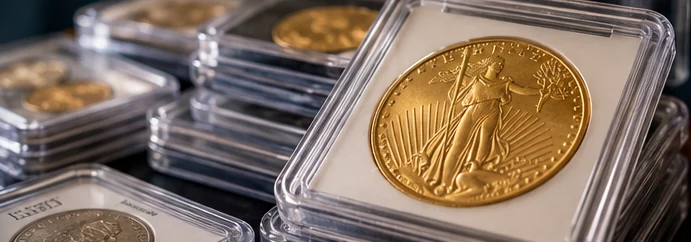
Coins preserved in protective holders

The first week after inheriting a coin collection

How to secure, photograph, preserve and organize coins before making any decisions.

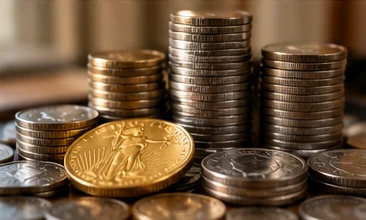
Stacks of silver and gold-toned collectible coins

Retail value versus dealer offer versus auction proceeds

Why the number in a guide may be very different from the check you receive.

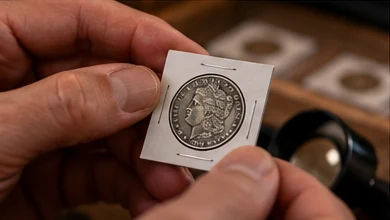
Collector examining a coin in a protective holder

Why you should never clean inherited coins

Cleaning can destroy original surfaces and lower collector appeal.

Is it silver, rare, or just old?

A quick orientation to precious-metal value and collectible value.

Should I send inherited coins for professional grading?

Grading costs money; it only makes sense for some coins.

Two people discussing a coin collection

Selling an inherited collection: dealer, auction, or direct sale

Tradeoffs in speed, risk, costs, and convenience.

Red flags when selling inherited coins

How to protect yourself from pressure, opaque offers and outright theft.

Estate records, tax questions and beneficiary fairness

How to preserve useful documentation and avoid pretending a quick estimate is a formal appraisal.

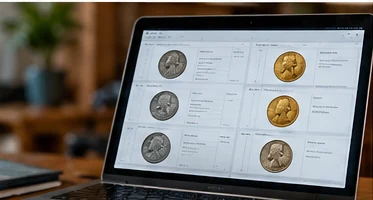
Illustrative computer inventory of collectible coins

Dates, mintmarks, grades and certification explained

The basic details that distinguish common coins from more desirable examples.

Printable inherited coin collection checklist

A simple sequence to guide relatives and executors.

Only when you're ready

Interested in selling your inherited collection?

The free guides, inventory, and selling comparison are available whether or not you contact us. If you would like help exploring a sale, you can request a conversation and, optionally, introductions to relevant coin professionals.

We are not the buyer or your independent appraiser. Any professional introduction depends on availability and suitability, is not guaranteed, and does not oblige you to accept an offer. We may earn a disclosed referral payment if a match is made.

Your private inventory stays private. This form does not send the coins, valuations, or inventory you saved in your browser. Give a broad description only. Never provide a home storage address, government ID, bank details, or scans of valuables.

Request a selling conversation

No guaranteed valuations, offers, or introductions. We won't subscribe you to a marketing list. See our privacy information.

Help first. Selling is optional.

Some people choose to keep the coins, sell a few individually, or seek an independent written estate appraisal. For substantial estates, consider an appraiser or several established dealers rather than relying on any single purchaser.

Explore ANA guidance

Our independence policy

We do not buy coins or certify their grade. Educational results never depend on whether you submit a lead. We will disclose any referral relationship, and professional introductions are entirely optional.